
ARTICLES | MICROCIRCULATION

The Clinical Importance of Microvascular Function and Microcirculation

By HiToP® USA

May 25, 2026

ARTICLES | MICROCIRCULATION

The Clinical Importance of Microvascular Function and Microcirculation

By HiToP® USA

May 25, 2026

By HiToP® USA

May 25, 2026

While circulation is essential for systemic blood transport, many of the physiological processes responsible for tissue health, oxygen delivery, and cellular recovery occur at the level of microcirculation.
Microcirculation represents the functional interface between vascular delivery and cellular metabolism, encompassing the capillaries, arterioles, and venules responsible for nutrient exchange and tissue perfusion. Because of its close relationship to cellular function and tissue viability, microvascular health has become an increasingly important focus in both clinical medicine and therapeutic research.

The Difference Between Circulation and Microcirculation

Circulation refers to the overall movement of blood throughout the body, driven by the heart. It includes major pathways such as arteries, veins, and large vessels that transport blood between the heart, lungs, and organs.
Microcirculation is a subset of circulation that occurs within the body’s smallest blood vessels — including capillaries, arterioles, and venules. This is where the exchange of oxygen, nutrients, and waste occurs directly between blood and tissues.
Circulation = whole-body blood flow
Microcirculation = local tissue-level exchange

The Importance of Microcirculation

Because microcirculation, the complex network of the body’s smallest blood vessels, directly affects tissue oxygenation and nutrient delivery, dysfunction at this level can significantly influence healing capacity and cellular health.

Microcirculation acts as a lifeline for nearly every tissue. It is the primary site where oxygen, nutrients, and waste are exchanged between blood and surrounding tissues. Beyond sustaining cellular function, it plays a key role in transporting oxygen and nutrients, regulating blood pressure, and maintaining temperature across all tissues and organs. More than a system for survival, microcirculation also reflects the body’s state of recovery and its capacity for healing.

Because microcirculation, the complex network of the body’s smallest blood vessels, directly affects tissue oxygenation and nutrient delivery, dysfunction at this level can significantly influence healing capacity and cellular health.
Microcirculation acts as a lifeline for nearly every tissue. It is the primary site where oxygen, nutrients, and waste are exchanged between blood and surrounding tissues. Beyond sustaining cellular function, it plays a key role in transporting oxygen and nutrients, regulating blood pressure, and maintaining temperature across all tissues and organs. More than a system for survival, microcirculation also reflects the body’s state of recovery and its capacity for healing.
As described in Clinical Capillaroscopy:
Microangiopathies are important per se in diabetes and collagen vascular disease. In other conditions, such as the broad spectrum of ischemic diseases and chronic venous incompetence, microvascular morphology and function are disturbed as a consequence of macrovascular damage. Microcirculation is the target section under both cases; the changes at this level decide whether a tissue survives or dies.
This highlights the importance of microvascular function not only in chronic disease but also in tissue survival, repair, and recovery.

Microcirculation in Clinical Practice: From Wound Healing to Chronic Disease

Although microcirculation occurs at the smallest vascular level, its impact on tissue health and recovery can be profound.  By delivering oxygen and essential nutrients directly to tissues, microcirculation lays the foundation for repair and recovery.
It helps stabilize blood pressure, regulate skin temperature, and support wound healing. As a result, microcirculation is central to overall human resilience.
Beyond its physiological role, microcirculation also serves as a powerful biomarker. It provides valuable clinical insight for assessing patient status, guiding treatment decisions, and evaluating therapeutic effectiveness. When impaired, it can reduce tissue perfusion, delay healing, and contribute to complications.
Monitoring microcirculation is particularly important in conditions such as:
  • Wound healing disorders
  • Chronic diseases
  • Diabetes
  • Compromised surgical flaps
  • Peripheral Artery Disease (PAD)
  • Raynaud’s phenomenon
  • Scleroderma
A review published in Cardiovascular Diabetology highlights a strong association between diabetes and microvascular dysfunction. Although resting blood flow was similar in both healthy individuals and patients with diabetes, the microvascular response to local skin heating was significantly reduced in diabetic patients.
Importantly, subgroup analyses showed no meaningful differences related to diabetes type, disease duration, or other health-related factors, suggesting that diabetes itself is a key contributor to impaired microvascular function.

Supporting Microcirculation with HiToP® Therapy
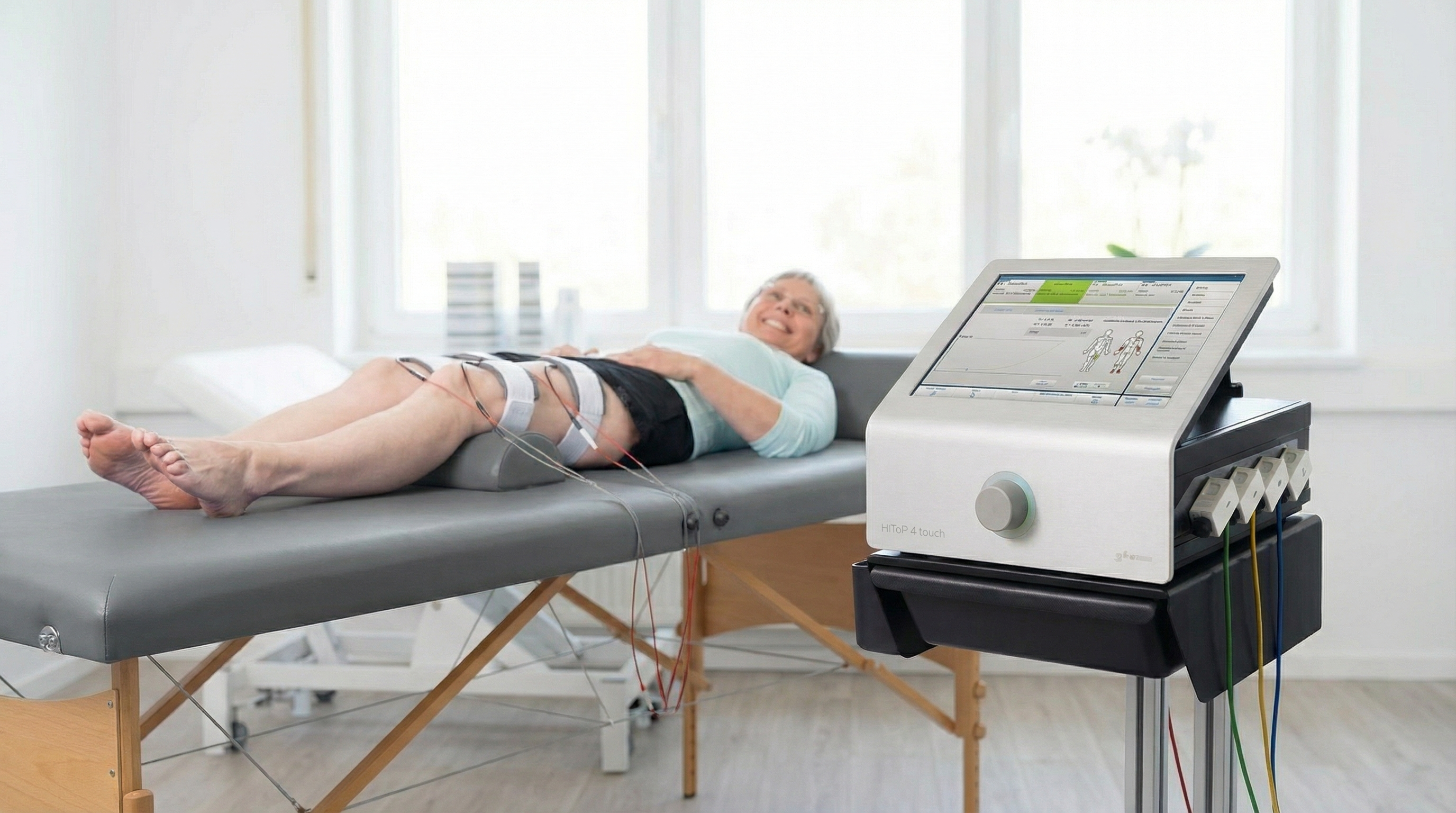
HiToP® High-Tone Therapy has been shown in clinical research to enhance microcirculation and improve tissue perfusion. By delivering patented high-frequency modulated technology designed to support physiological activity at the cellular level, HiToP® therapy has demonstrated measurable effects on peripheral microvascular blood flow.
In a study involving 30 patients with peripheral vascular disease, published by Iwona Nowakowska et al. (2009), significant improvements in peripheral microcirculation in the lower limbs were observed immediately following HiToP® treatment.
Similarly, a clinical study conducted in Heidelberg, Germany involving 27 diabetic patients reported a significant increase in capillary blood flow after one hour of HiToP® therapy. The findings, published by Per M. Humpert et al. (2008), demonstrated measurable improvements in peripheral microvascular perfusion following treatment.
Importantly, both studies utilized Laser Doppler Flowmetry technology to objectively assess changes in tissue perfusion and microvascular blood flow.
Collectively, these findings support HiToP® therapy’s role in enhancing peripheral microcirculation and improving tissue perfusion.

Measuring Microcirculation in Clinical Research

Because microcirculation occurs within extremely small superficial vessels, evaluating it requires highly sensitive measurement techniques. One of the most accurate tools used in microcirculation research is Laser Doppler Flowmetry (LDF), a noninvasive technology capable of measuring microvascular blood flow by detecting frequency shifts caused by moving red blood cells. This allows researchers to assess tissue perfusion in real time at the capillary level.
Compared with technologies designed primarily for larger or deeper vessels, Laser Doppler techniques are particularly useful for detecting subtle changes in superficial microvascular blood flow. While ultrasound Doppler is more commonly used for evaluating larger vascular structures, Laser Doppler provides greater sensitivity for measuring capillary-level perfusion and dynamic microvascular changes in research settings.
Advantages of Laser Doppler Flowmetry include:
  • High sensitivity to capillary-level perfusion
  • Real-time tissue perfusion assessment
  • Noninvasive measurement
  • Strong temporal resolution for dynamic vascular changes
  • Enhanced evaluation of superficial tissue blood flow
For this reason, Laser Doppler Flowmetry has been used in multiple clinical studies evaluating the effects of HiToP® therapy on peripheral microcirculation and tissue perfusion.

Clinical Implications

Although often overshadowed by larger vascular systems, microcirculation plays a foundational role in tissue health, oxygen delivery, metabolic activity, and recovery. Because it directly influences nutrient exchange at the cellular level, microvascular function can significantly affect healing capacity, tissue resilience, and overall physiological function.
As interest in cellular health and tissue performance continues to grow, microcirculation has become an increasingly important focus in both clinical evaluation and therapeutic research. Technologies capable of supporting tissue perfusion and enhancing microvascular function like HiToP® can play an important role in helping clinicians address recovery, chronic conditions, and tissue health at a deeper physiological level.

Clinical Note: The information presented in this article is intended for educational purposes and discussion of published scientific literature. References to physiological mechanisms, clinical findings, and published research do not necessarily reflect FDA-cleared indications for HiToP® High-Tone Therapy. Healthcare providers should exercise their own clinical judgment when evaluating treatment options for individual patients.